
Every spring, National Work Zone Awareness Week serves as a powerful reminder that behind every construction cone, flashing light, and detour sign are real people working to improve the roads and parking lots we rely on every day. This year’s theme, “Safe Actions Save Lives,” underscores a simple but urgent truth: the choices we make behind the wheel can mean the difference between life and tragedy.
The Reality of Work Zones
Work zones are dynamic, often unpredictable environments. Lane shifts, reduced speed limits, narrowed shoulders, restricted areas and the presence of workers and heavy equipment all require heightened awareness. Yet, far too often, drivers approach these areas with distraction, impatience, or disregard for safety guidelines.
According to transportation safety data, thousands of crashes occur in work zones each year—many resulting in serious injuries or fatalities. What’s even more sobering is that most victims are drivers and passengers, not just workers. This reinforces a critical point; work zone safety is everyone’s responsibility.
What Does “Safe Actions” Look Like?
Practicing safe actions in work zones doesn’t require special skills—just attention, patience, and care. Here are a few key behaviors that can save lives:
1.Slow Down
Speed limits in work zones are reduced for a reason. Slowing down gives you more time to react to sudden changes and helps protect workers who may be just feet away.
2.Stay Alert
Put away distractions like phones and focus entirely on the road. Watch for signage, flaggers, and unexpected movements from vehicles or workers.
3.Follow Instructions
Work zone signs and flaggers are there to guide you safely through. Obey their directions, even if it means a brief delay.
4.Maintain Safe Distance
Rear-end collisions are one of the most common types of work zone crashes. Keep a safe following distance to allow for sudden stops.
5.Merge Early and Smoothly
When lanes are closing, merge calmly and early. Aggressive or last-minute merging increases the risk of accidents.
 The Human Side of the Story
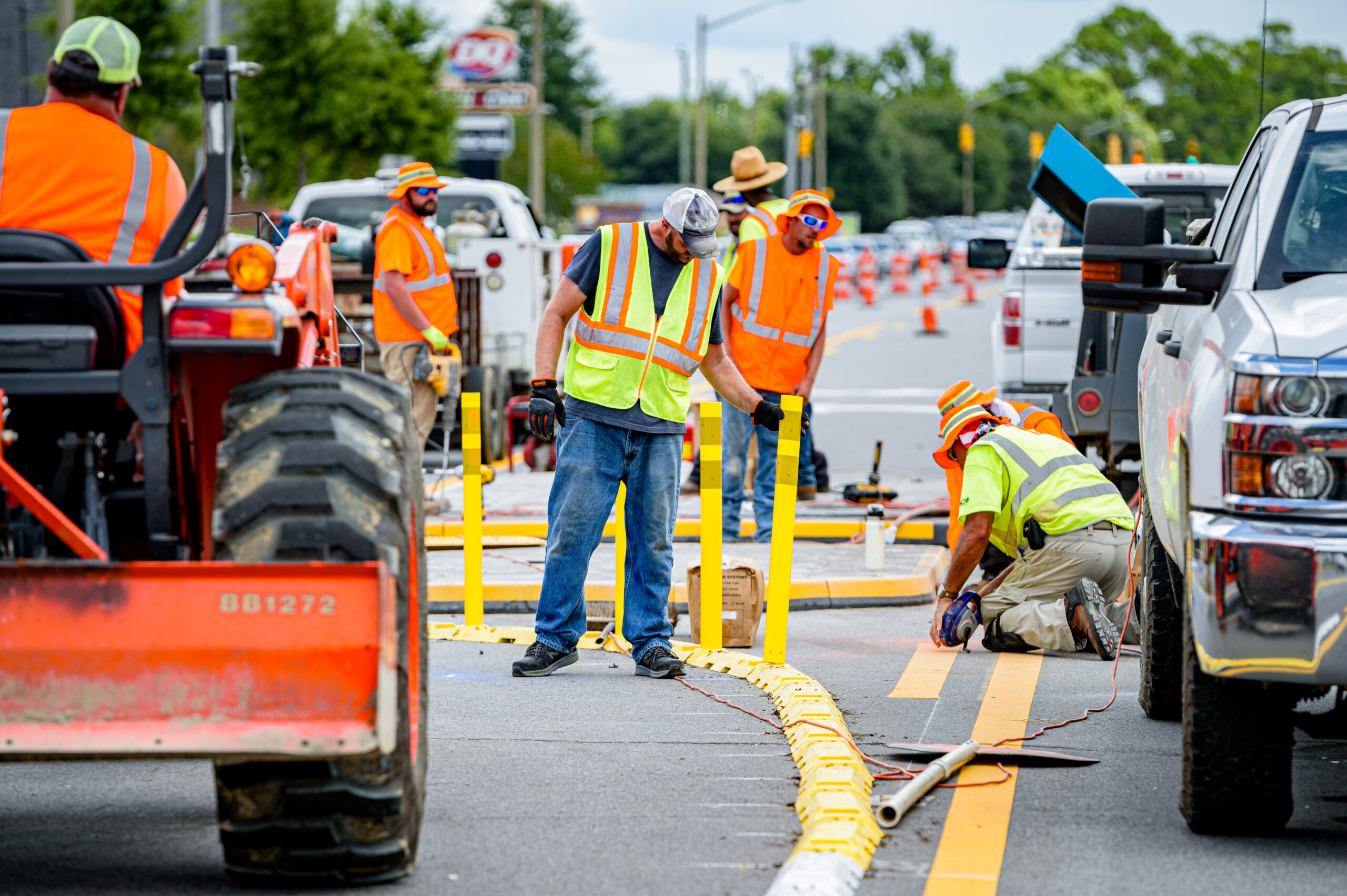
It’s easy to think of work zones as inconveniences, but for construction workers, they are workplaces. These individuals are parents, friends, and neighbors who deserve to return home safely at the end of each day.
Taking a moment to slow down and drive carefully is a small act that carries enormous impact. It shows respect for the people maintaining and improving our infrastructure—and it protects your own life and the lives of others on the road.
Safety Beyond the Work Zone: Don’t Overlook Parking Lots
While work zones demand our attention, safety doesn’t stop once you’re off the street. Parking lots—at shopping centers, offices, and even near construction areas—require careful driving especially when work is being performed.
Tight spaces, frequent stops, limited visibility, and a mix of pedestrians and vehicles make parking lots especially prone to accidents. Just like in work zones, distractions and rushing can quickly lead to preventable incidents. Pay attention to closed areas or entire lots for work and be mindful of those working there.
Here are a few simple ways to stay safe in parking lots:
1.Drive Slowly: Speeding through a parking lot reduces your ability to react to pedestrians or other vehicles.
2.Watch for Pedestrians: People may walk between cars or behind your vehicle unexpectedly—always stay alert.
3.Use Your Signals: Clearly indicate when you’re turning or backing out to communicate with other drivers.
4.Check Your Surroundings: Before reversing, look in all directions and use mirrors and backup cameras if available.
5.Stay Focused: Avoid using your phone or multitasking while navigating tight spaces.
These small actions mirror the same principles we follow in work zones: awareness, patience, and respect for others.
A Shared Commitment
National Work Zone Awareness Week isn’t just about awareness, it’s about action. By committing to safer driving habits, whether on the highway or in a parking lot, we can all contribute to reducing crashes and saving lives.
So, the next time you see orange cones ahead—on the road or a parking area—remember, safe actions aren’t just good driving, they’re life-saving decisions.
Let’s make every trip a safe one.