
Revolutionizing Urban Crosswalks: RAE's MMA System Transforms Pedestrian Paths with Durability and Design
Preformed thermoplastic panels have been a common choice for decorative crosswalks due to their ease of application and initial brightness. However, their Achilles’ heel becomes evident over time. Exposure to heat and ultraviolet (UV) light inevitably leads to shrinking and cracking, detracting from the visual allure and potentially compromising pedestrian safety. These materials’ inherent inability to withstand the rigors of nature necessitates frequent replacements, thus increasing maintenance costs and environmental footprint.
Enter RAE’s MMA-based solution. Unlike its thermoplastic counterparts, MMA decorative crosswalk systems are engineered to resist the detrimental effects of heat and UV exposure.

Thermoplastic over concrete failure
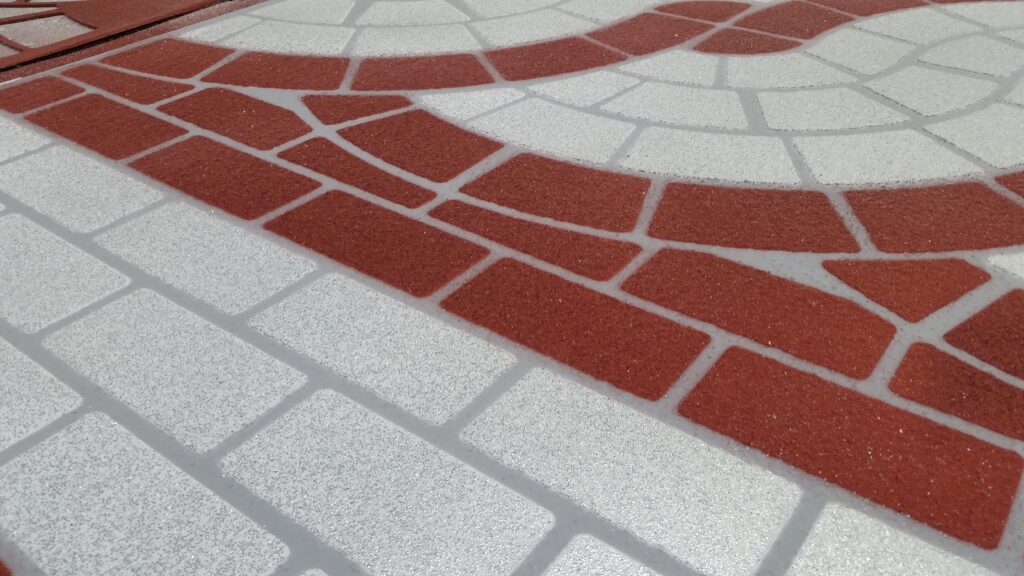
In the realm of urban development and infrastructure enhancement, RAE Products & Chemicals Corp. is revolutionizing the way communities design and implement crosswalks. By introducing an innovative methyl methacrylate (MMA) decorative crosswalk system, RAE is setting new standards for durability, aesthetic appeal, and maintenance efficiency. This system is poised to replace the traditional preformed thermoplastic decorative panels, which, despite their initial visual appeal, present long-term drawbacks due to their susceptibility to environmental stressors.
The key to their longevity and durability lies in their unique application process and formulation. The first coat of the MMA system employs a 98:2 formula, integrated with an anti-slip aggregate to ensure pedestrian safety. This base layer is meticulously applied using a squeegee and then evenly distributed with a backroll using a paint roller, creating a robust foundation that anchors the entire system. But the innovation doesn’t stop at functionality. RAE’s MMA system shines – quite literally – in its aesthetic versatility. The subsequent decorative coats utilize a 1:1 MMA formula and are applied using a Graco plural component MMA sprayer. This application method, when used atop the base coat through faux stone patterned stencils, creates a surreal stone pattern that not only mimics the natural beauty of stone but also surpasses concrete in strength and longevity. The result is a visually stunning, highly durable crosswalk that enhances urban landscapes while reducing the need for frequent maintenance.
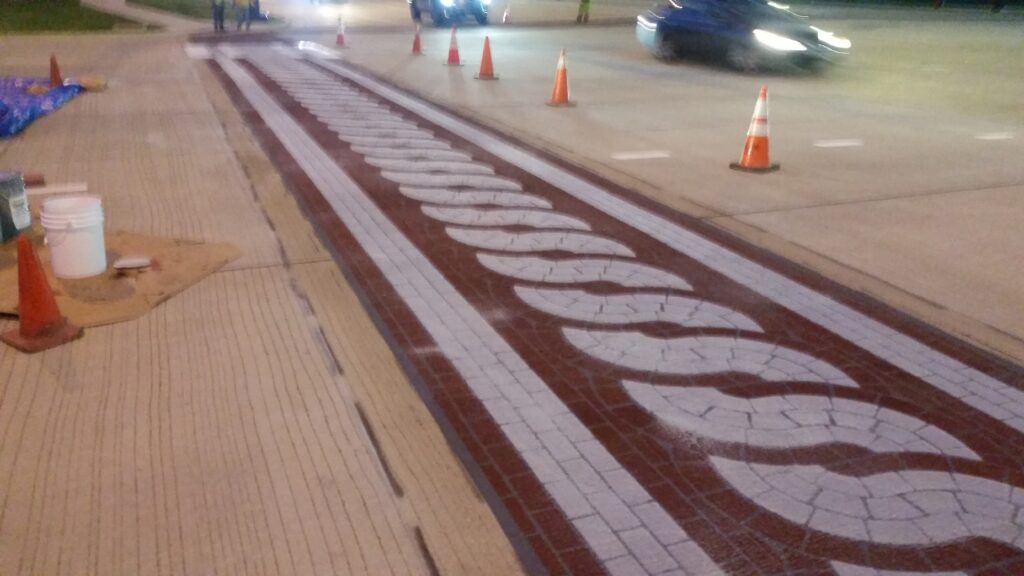
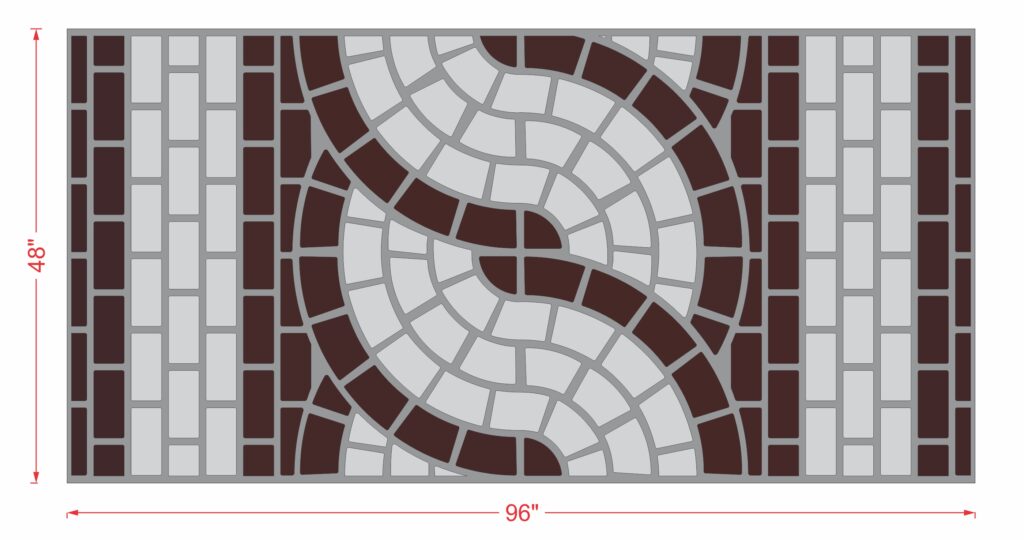
MMA Brick Pattern TP32 Quarter Round
The practical benefits of RAE’s MMA decorative crosswalk system are manifold. Municipalities and property managers can look forward to a significant reduction in long-term maintenance costs, thanks to the system’s resistance to environmental stressors. Moreover, the enhanced durability and anti-slip features contribute to a safer urban environment for pedestrians. Aesthetically, the ability to create realistic stone patterns and other decorative designs allows for greater creativity in urban planning, enabling cities to beautify pedestrian pathways while ensuring their longevity and durability.
RAE Products & Chemicals Corp.’s innovative approach to decorative crosswalks is a testament to the power of advanced materials science in solving real-world problems. By addressing the limitations of traditional materials and offering a superior alternative, RAE is not only advancing infrastructure technology but also contributing to more sustainable, attractive, and safe urban environments. As communities continue to seek solutions that combine functionality with form, the MMA decorative crosswalk system stands out as a forward-thinking choice that will last years and years.
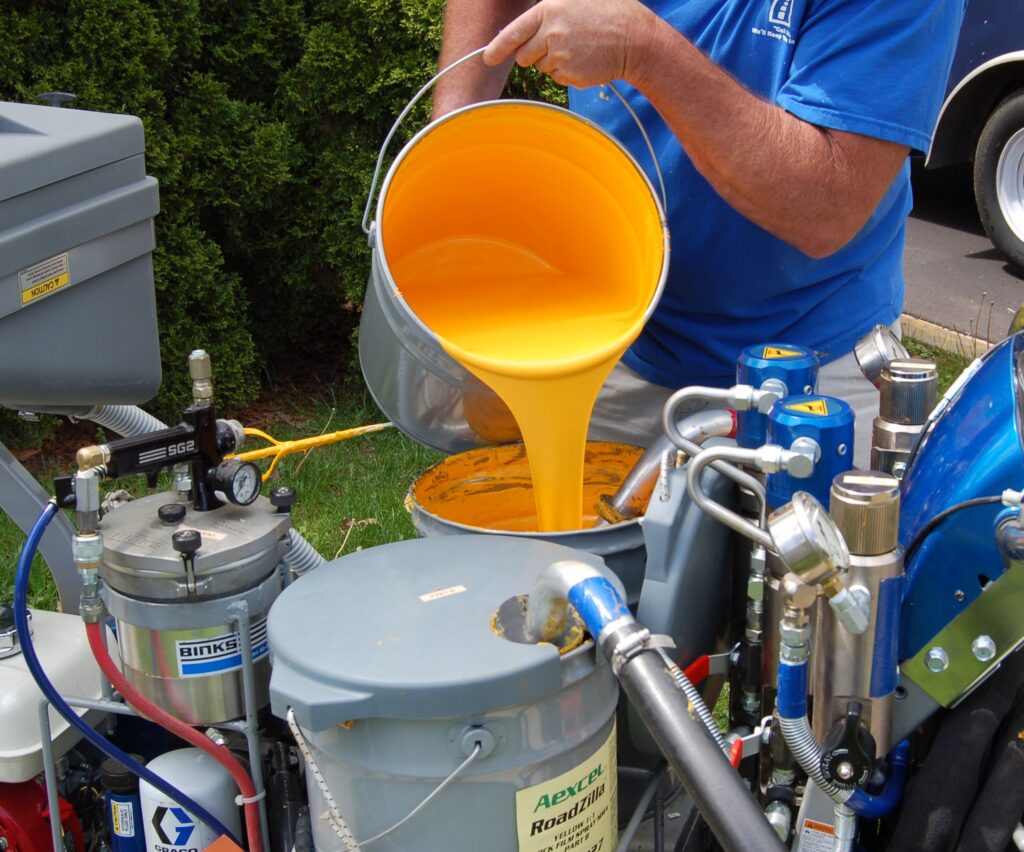
Building on the innovative strides of RAE Products & Chemicals Corp.’s MMA decorative crosswalk system, Surface Construction Co., under the visionary leadership of Andrew DiPiazza, has elevated the concept to new heights of aesthetic appeal and durability. By ingeniously incorporating colored glass into the final coats of the MMA application, Surface Construction Co. has not only enhanced the visual appeal of urban crosswalks but also significantly boosted their durability.
The effect of the colored glass integration is nothing short of spectacular. The finished crosswalks boast a unique, carpet-like appearance, offering an illusion of texture and depth that adds a luxurious touch to urban landscapes. This visual effect not only enhances the aesthetic value of pedestrian pathways but also contributes to a more inviting and engaging urban environment. The use of colored glass allows for a wide range of design possibilities, enabling cities to customize their crosswalks in line with specific themes or community identities.
Furthermore, the addition of colored glass not only serves aesthetic purposes but also contributes to the crosswalks’ functional value. The glass particles increase the surface traction, thereby improving safety for pedestrians, especially in wet conditions. This thoughtful consideration ensures that the crosswalks’ visual appeal does not compromise their practical role in urban infrastructure.
Andrew DiPiazza and Surface Construction Co.’s innovative approach to incorporating colored glass into MMA decorative crosswalks represents a significant leap forward in urban design and infrastructure development. By blending beauty with strength, they have created a product that not only elevates the appearance of urban spaces but also offers a long-lasting, durable solution to the challenges of pedestrian pathway maintenance. This pioneering technique stands as a testament to the potential of combining traditional materials with modern technology to achieve superior outcomes in urban development.